Aces of the Sky: Epic Dogfights turns aerial combat into a fast chase, where a Space Bar boost can suddenly change the distance between aircraft. Airplanes, helicopters, and giant zeppelins share the sky. That mix keeps each combat wave visually busy and demands steady control.
The game gives you several ways to guide your aircraft. Use WASD, the Arrow Keys, or the Left Mouse Button to control movement. Each option supports the same core goal: keep your plane moving with purpose while threats fill the airspace.
Focus on clean routes instead of wild turns. Watch where enemy aircraft travel, then place your own plane where you have room to react. Play Aces of the Sky: Epic Dogfights online here and test how quickly a well-timed boost can reshape a chase.
Flight Systems in Aces of the Sky: Epic Dogfights
Primary Steering Options
Start with the control style that feels most natural. WASD controls your aircraft’s movement and suits players who like a familiar keyboard layout. The keys sit close together, which can make small directional changes feel simple during a crowded wave.
Arrow Keys also control aircraft movement. They offer a more separated layout, so some players find them easier to use when they want clear left, right, up, and down inputs. Try them if WASD makes your hand feel cramped or awkward.
The Left Mouse Button provides another movement option. It lets you control the aircraft without relying on the keyboard for direction. This can work well when you want to focus on where your plane sits in the open sky.
Do not treat movement as a series of panic corrections. Make deliberate adjustments, then check the space ahead. Short changes help you keep a readable flight path. Big swings can place you closer to another aircraft than intended.
Spend an early wave learning your preferred input. Guide the plane toward open areas, then make a few controlled direction changes. Once the movement feels natural, you can pay more attention to helicopter routes and giant zeppelin positions.
Managing Boost for Positioning
The Space Bar boosts your aircraft’s speed. Use it when normal movement will not create enough distance. A quick burst can carry you away from a tight cluster of airplanes.
Boost also helps when a helicopter moves across your intended route. Instead of drifting behind its path, accelerate into a clearer position. That gives you a better chance to keep the threat within your view.
Save the key for a reason. Pressing Space Bar with no route planned can push your aircraft into another busy area. Pick your direction first, then boost through the available gap.
Enemy Types and Aerial Threats
Standard Aircraft and Nimble Helicopters
Combat waves include airplanes, and they form much of the moving traffic around you. Their paths can crowd the screen when several aircraft enter the same area. Keep enough open space around your plane to make the next turn cleanly.
Helicopters demand a different kind of attention. They are agile, so their movement can feel less predictable than a straightforward aircraft pass. Watch their direction before committing to a route. A helicopter that looks distant can quickly become part of your immediate flight space.
Choose the calmer side of a wave whenever you can. If airplanes fill one direction, guide your aircraft toward the side with fewer overlapping paths. This does not remove danger, but it gives you more time to adjust.
Keep your turns measured near helicopters. Sudden movement may solve one problem while creating another. Instead, angle away early and leave room for a follow-up correction. That approach works especially well when aircraft and helicopters share the same section of sky.
Look beyond the closest enemy. A clear line now may close moments later when another aircraft crosses it. Good awareness means tracking the next space, not only the current one.
Colossal Zeppelins and Warships
Giant zeppelins change the scale of a combat wave. Their massive shape stands apart from the smaller airplanes and agile helicopters. Spot them early, then avoid letting their size distract you from nearby movement.
Give yourself room around a zeppelin’s visible area. Smaller aircraft can still cross the surrounding airspace. Keep your route flexible rather than flying straight toward the largest object on screen.
Use the zeppelin as a reference point. Its size helps you judge where the busiest part of the wave has formed. Then guide your aircraft toward a clearer lane.
Targeting Tactics in Aces of the Sky: Epic Dogfights
Lining Up Flight Vectors
Strong positioning begins before you close on a threat. Watch an airplane or helicopter’s current direction, then guide your aircraft onto a route that meets that movement cleanly. This creates a clearer flight vector than chasing from directly behind.
Think of the sky as a set of crossing lanes. One lane may lead through open space. Another may cut across helicopter movement or pass too near a giant zeppelin. Pick the route with the fewest immediate conflicts, even if it takes an extra moment to reach.
Approach from an angle when traffic builds. A side route often gives you more room to see incoming aircraft. It also leaves an exit path if the area closes. Flying straight into the center of a wave limits those choices.
Use the outer edges of the action to reset your view. From there, you can see which airplanes travel together and which helicopters break away. Move back toward the active area only after you identify a route through it.
Keep your aircraft pointed where you intend to go next. Do not focus so hard on one nearby threat that you ignore the space beyond it. A good vector should serve two jobs: it brings you closer to the action and preserves room for the next adjustment.
When a route opens, commit to it. Hesitation can leave your plane between several paths. Move with purpose, then reassess once you reach clearer air. This rhythm makes the dogfights feel controlled instead of chaotic.
Take to the skies and try Aces of the Sky: Epic Dogfights right here.
Defensive Flying and Collision Avoidance
Evading Interceptor Swarms
When several smaller aircraft gather nearby, avoid turning into the middle of them. Shift toward the widest visible gap instead. Open air gives you more choices than a packed route.
Keep moving with a simple plan. Guide your aircraft away from the densest traffic, then make a second correction after the group passes. Two calm adjustments usually work better than one huge direction change.
Helicopters can make a crowded area feel tighter because they are agile. Track their movement before crossing their line. If the route looks uncertain, wait for a cleaner opening rather than forcing the approach.
Use speed carefully when space shrinks. A boost can help you leave a busy section, but only if you have already chosen a clear direction. Fast movement without a lane can make the crowd harder to read.
Navigating High-Density Airspace
High-density airspace rewards awareness. Look for empty sections between airplanes instead of staring at the largest threat. Keep your aircraft near room to turn, not boxed between several routes.
Change direction early when the screen starts to fill. Small moves preserve space. Late corrections often leave fewer safe-looking lanes.
Surviving Late Waves in Aces of the Sky: Epic Dogfights
Prioritizing Heavy Boss Targets
Giant zeppelins deserve attention because they dominate the scene. Still, do not let their size hide the smaller airplanes and helicopters moving around them. Keep checking the nearby airspace before you commit to a route.
Break a large encounter into smaller decisions. First, find a clear approach lane. Next, note where the closest aircraft travel. Then guide your plane through the space that stays open longest.
- Spot the zeppelin’s position early.
- Check surrounding aircraft movement.
- Move through the clearest available lane.
Stay patient when the route closes. Circle toward open air and try again when the wave spreads out.
Maintaining Formation Control
Extended waves test your consistency. Keep your aircraft on purposeful paths rather than making constant sharp changes. Calm movement helps you read airplanes, helicopters, and zeppelins together.
Leave yourself an escape direction at all times. When traffic shifts, turn toward that open lane and rebuild your position from there.
✨ Key Features of Aces of the Sky: Epic Dogfights
- Dogfights featuring aircraft, agile helicopters, and massive zeppelins
- Flexible movement inputs supporting WASD, Arrow Keys, and Left Mouse Button
- High-speed engine acceleration triggered via Space Bar
- Fast Unity WebGL performance built for browser play
Aces of the Sky: Epic Dogfights FAQs
What are the basic controls for Aces of the Sky: Epic Dogfights?
Keyboard: WASD - control your aircraft's movement; Arrow Keys - control your aircraft's movement; Space Bar - boost the aircraft's speed. Mouse: Left Mouse Button - control your aircraft's movement.
Can I play Aces of the Sky: Epic Dogfights on mobile devices?
Aces of the Sky: Epic Dogfights opens in a phone browser, but it is played with the keyboard, so a computer works best.
What types of enemies appear during aerial waves?
You face standard fighter planes, quick-moving helicopters, and massive armored zeppelins. Heavy warship encounters act as boss fights between standard enemy swarms.
Conclusion
Aces of the Sky: Epic Dogfights delivers focused aerial combat action with straightforward controls that make it easy to take command of your aircraft. Guide its movement with WASD, the Arrow Keys, or the Left Mouse Button, then use the Space Bar to boost speed when you want a faster burst of motion.
The clear control options keep the experience accessible while leaving room for lively aircraft handling and quick decisions. If you are ready to take to the air, play Aces of the Sky: Epic Dogfights right here on this page.
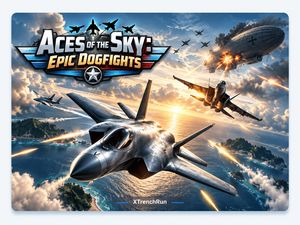
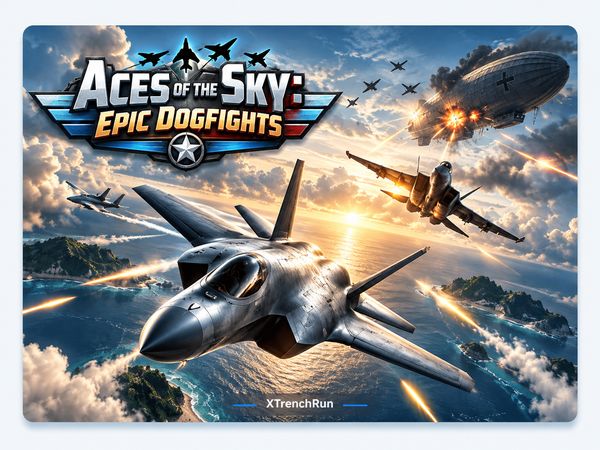
Aces of the Sky: Epic Dogfights Game Image

No comments yet. Be the first to share your thoughts!